There are two ways of being IATF 16949 certified. The first is to commission a consultant, write the procedures, pass the audit, and put the certificate on the wall. The second is to actually change how you run the floor. We chose the second route — and the differences are worth describing, because they're what customers should be looking for when they audit any IATF-certified brass supplier.
PPAP changes how new programs launch
PPAP (Production Part Approval Process) is the structured submission an automotive customer expects before they accept a new part into production. Levels 1–4 increase the document depth, with Level 3 being the standard for new tooled parts. Running PPAP properly means we don't accept a new program on a verbal commitment — we hold ourselves to a documented control plan, FMEA, dimensional report, and a PSW (Part Submission Warrant) signed off by quality before we ship the first production lot.
FMEA forces uncomfortable conversations
A process FMEA forces you to enumerate every way a manufacturing step could go wrong, assign a severity / occurrence / detection score, and either fix the high-risk failures or document why you accept them. Most of the floor improvements we make on new programs come out of this process — they wouldn't surface otherwise.
SPC moves quality from inspection to process
Statistical process control on critical dimensions — diameter on a seal seat, thread pitch on a pressure fitting — means we catch drift before it produces a bad part, not after. We post SPC charts at the machine and act on out-of-control rules. The customer benefit is fewer non-conformances; the supplier benefit is fewer scrap costs.
MSA tells us when a gauge can't see the tolerance
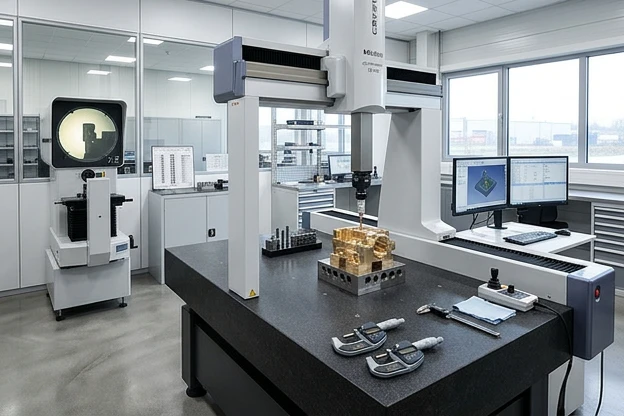
Measurement Systems Analysis sounds bureaucratic, but it answers a critical question: can our gauge actually measure the tolerance we're trying to hold? If we're holding a ±0.01 mm diameter with a digital micrometer that has its own ±0.005 mm uncertainty, we're not really controlling the tolerance. MSA tells us which gauges can do which jobs.
Customer-specific requirements (CSRs)
Every automotive OEM has CSRs — extras layered on top of IATF that they expect their suppliers to follow. Running an IATF system properly means we have a CSR matrix per customer, and the control plan reflects it.
- PPAP forces structured launches, not verbal sign-offs
- FMEA surfaces failure modes that improve the process
- SPC catches drift before bad parts ship
- MSA confirms gauges can see the tolerances they're measuring