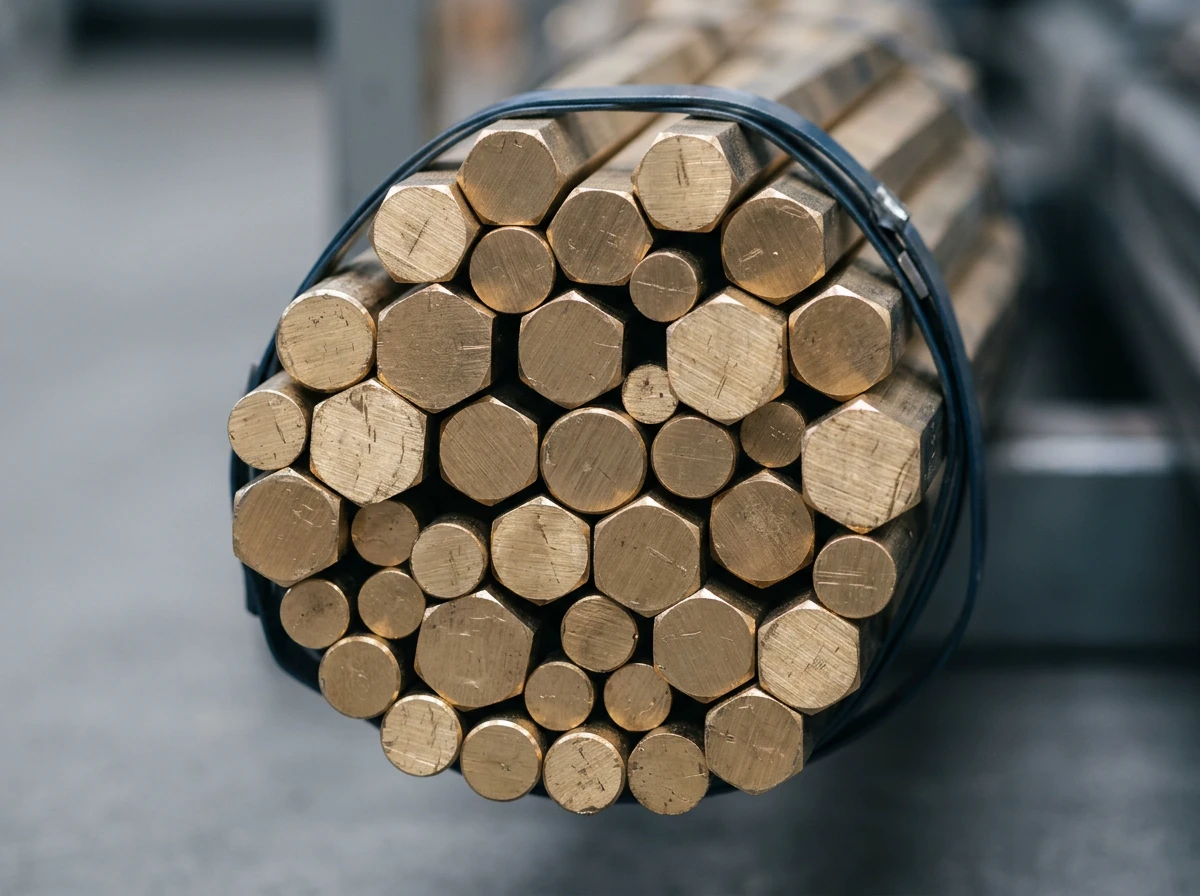
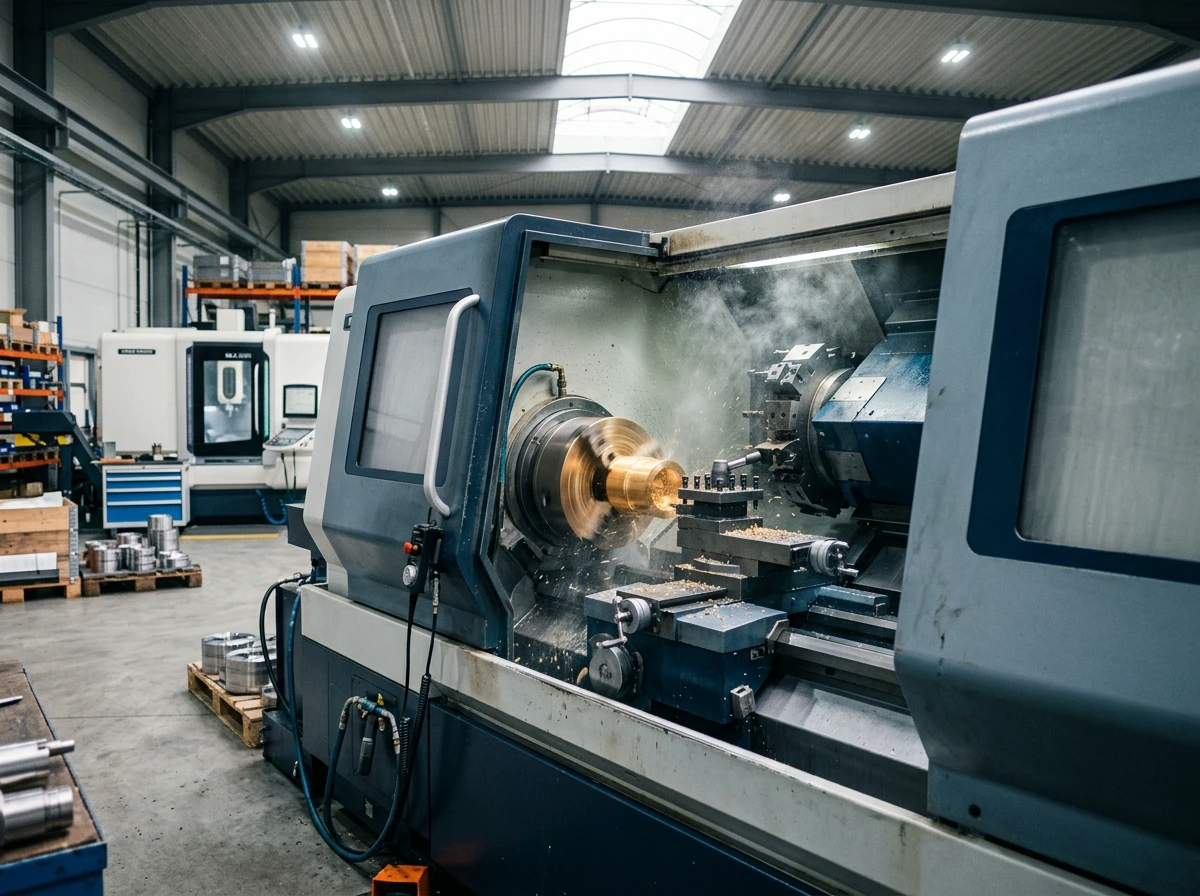
A surprising number of brass-component drawings we receive cost the customer money before the first chip is cut — not because the part is hard to make, but because the drawing leaves room for interpretation. This is a short DFM (design-for-manufacturability) checklist of the things we wish every drawing did, written from the supplier side.
1. Specify the alloy explicitly
Don't write "brass." Write CW614N, CW617N, CW602N, or CW724R — and ideally include the equivalent (C37700, etc.) for non-European buyers. If the part is for drinking water, write that in a note: it changes alloy choice and finishing.
2. Tolerance only what needs tolerancing
Tight tolerances cost money. The diameter that mates with a seal needs ±0.02 mm. The diameter of an external flange that touches nothing needs ±0.2 mm. Don't blanket-apply ±0.05 to every dimension; mark up only the features that need it. Use a general tolerance block for everything else.
3. Call out surface finish only on critical faces
Ra ≤ 0.8 µm everywhere is expensive and almost never needed. Ra ≤ 0.8 µm on sealing faces, Ra ≤ 3.2 µm on machined non-critical surfaces, and as-extruded on the rest is a reasonable default for most parts.
4. Specify threads with full callout
Write the standard (BSP, NPT, metric ISO), the size, the pitch where ambiguous, and the class fit. "M8" is not enough; write "M8 × 1.0 — 6g" or "G 1/2 — BS EN ISO 228-1." This avoids wrong-thread incidents at first article and PPAP.
5. Mark the datum
Use GD&T datums where the part has functional features. A drawing with three orthogonal datums (A, B, C) is unambiguous; a drawing without datums forces the supplier to guess which feature is the reference, and that guess may not be your guess.
6. State the finish and any plating
Plating (Ni, Cr, Sn, Ag) and finish (polished, brushed, sand-blasted, tumbled) are scope items, not assumptions. Specify the type, thickness range, and any masking. For laser-marking or engraving, include the artwork.
7. Annual volume on the drawing
A note like "EAU 25,000 / annual" on the drawing changes how we quote — we can amortise tooling differently, pick a different machine, and propose process improvements. Volume context is one of the cheapest things you can give us.
- Specify the alloy explicitly (CW614N / CW617N / CW602N / CW724R)
- Tolerance only what matters; use a general block for the rest
- Use full thread callouts (size + pitch + class)
- Include datums, finish, plating, and annual volume