Brass for Electrical.
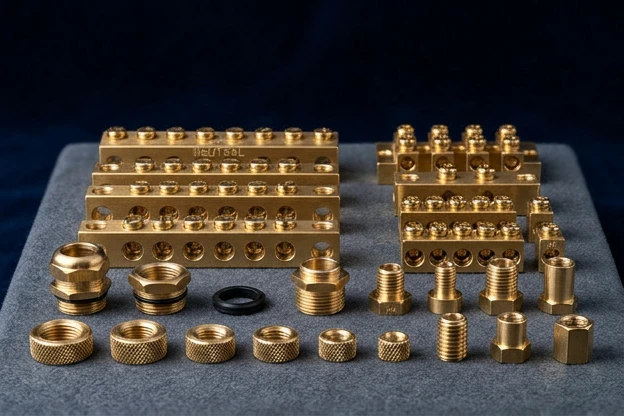
Conductive brass parts for electrical assemblies — terminal blocks, neutral links, cable glands, knurled inserts for plastic moulding, and high-volume miniature screw-machine parts. Surface finish and repeatability are the controls that matter here.
What the electrical industry asks of brass.
Contact resistance
Electrical terminals fail because of high contact resistance — and contact resistance comes from surface finish, plating, and clamping force, in that order.
Knurling for moulding
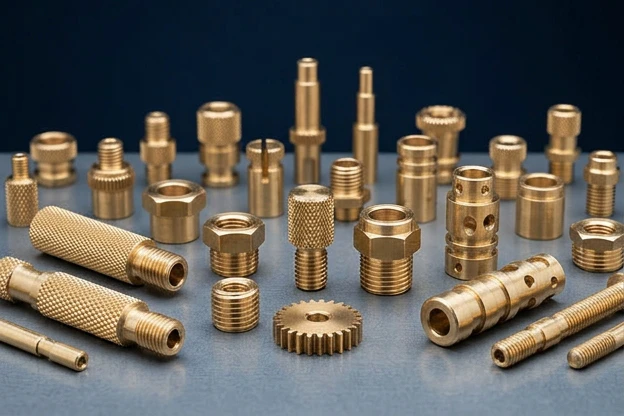
Brass inserts have to grip in over-moulded plastic. Knurl profile, pitch, and depth are the difference between a part that stays in and a part that pops out.
High-volume miniatures
M3, M4, M5 brass parts ship in millions per year. Drift on diameter, thread, or finish is expensive on this scale.
What we bring to electrical programs.
A short list of controls, alloys, and process disciplines that make us a sensible default supplier for this sector.
- Sliding-head lathes for high-volume miniatures
- Sn / Ni / Ag plating for low-resistance contacts
- Knurling — straight, diamond, single-cut to drawing
- Surface finish Ra ≤ 1.6 µm on threads
- PPAP for automotive electrical programs
Typical components
- Terminal blocks and links
- Neutral links and bus bars
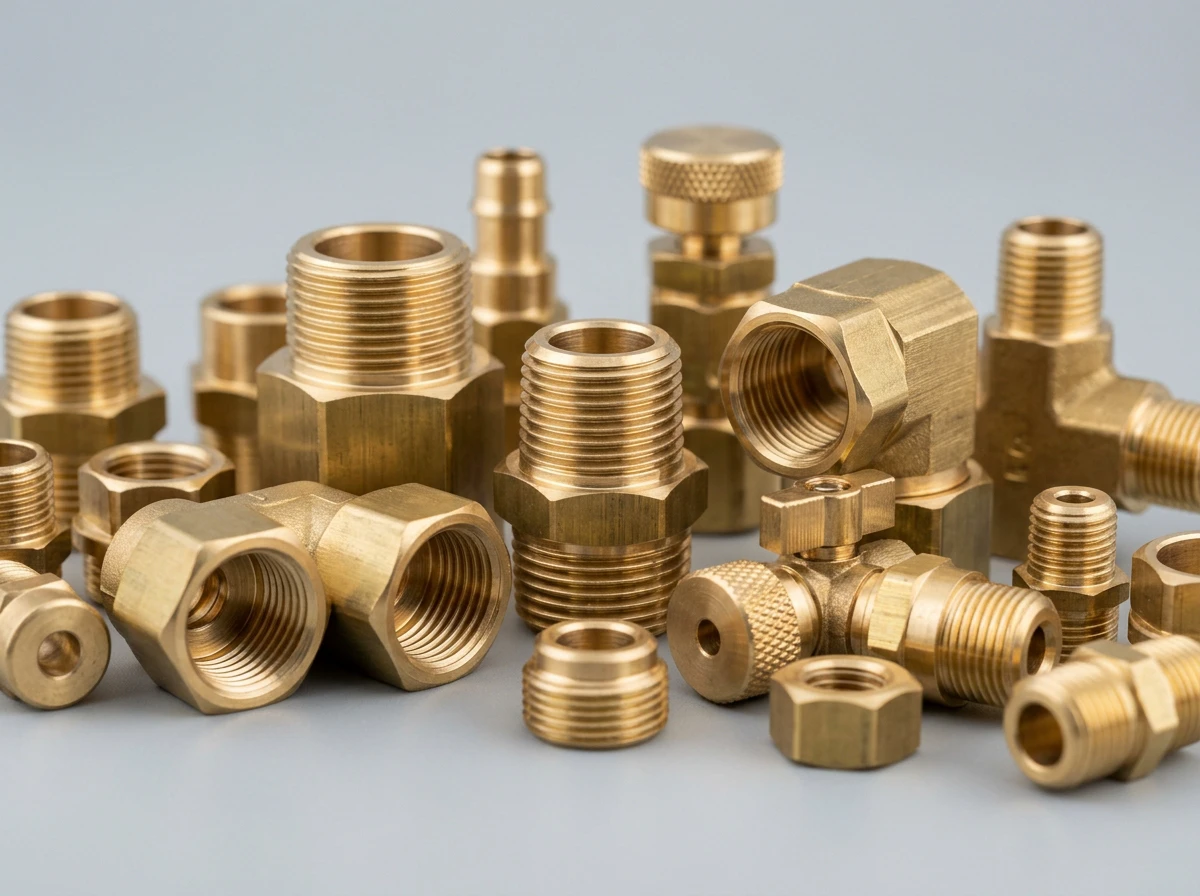
- Cable glands and adapters
- Threaded inserts for plastics
- Knurled inserts and standoffs
- Screws, nuts, washers, pins
Related product families
Send your electrical brass drawing.
Share part details, drawing (PDF / STEP / DWG), and annual volume. Our sales engineers acknowledge every RFQ within one business day.
Buyer FAQs
- Do you produce moulding-grade brass inserts?
- Yes — knurled inserts for over-moulding into thermoplastic assemblies are a high-volume line for us. Knurl profile, pitch, and length all delivered to drawing.